





Kubota diesel engines are widely used in excavators, compact construction equipment, tractors, generators, and other heavy-duty machinery. Known for their durability and fuel efficiency, Kubota engines can still develop problems caused by poor fuel quality, clogged filters, insufficient lubrication, overheating, electrical faults, or improper maintenance.
1. When the Engine Is Hard to Start
A Kubota diesel engine may be difficult to start because of low fuel, a clogged fuel filter, air in the fuel system, a weak battery, incorrect engine oil viscosity, or glow plug problems.
Solutions:
- Check the fuel level and fuel quality.
- Replace a clogged fuel filter.
- Remove air from the fuel system.
- Check the battery and starter.
- Use the recommended engine oil.
- Inspect the glow plugs on applicable models.
If the engine still cannot start, check the injectors, fuel pump, compression, and electrical system.
2. When Engine Output Is Insufficient
Low engine power can cause slow hydraulic movement, poor digging performance, reduced RPM, or difficulty working under load.
Common causes include:
- Clogged air filter
- Restricted fuel filter
- Poor-quality diesel
- Faulty fuel injector
- Turbocharger problems
- Excessive engine load
Solutions:
Check the air filter and fuel filter first. Then inspect the fuel system, injectors, turbocharger, and engine fault codes.
3. When the Engine Stops Suddenly
A Kubota engine may suddenly stop because of fuel starvation, air in the fuel system, fuel-system failure, overheating, low oil pressure, or electronic protection.
What to Check
- Fuel level and fuel lines
- Fuel filter and injector
- Engine oil level
- Coolant level
- Warning lights and fault codes
If there is abnormal engine noise, severe overheating, or low oil pressure, do not repeatedly restart the engine.
4. When the Engine Overheats
Overheating can seriously damage the engine and should be addressed quickly.
Common causes include:
- Low coolant
- Dirty or blocked radiator
- Damaged fan belt
- Faulty thermostat
- Water pump failure
- Low engine oil
- Excessive engine load
Solutions
Stop the machine safely and allow the engine to cool. Check the coolant, radiator, fan belt, thermostat, water pump, and engine oil.
Never open a hot radiator cap, as hot coolant and steam can cause serious burns.
5. When Exhaust Emissions Are Abnormal
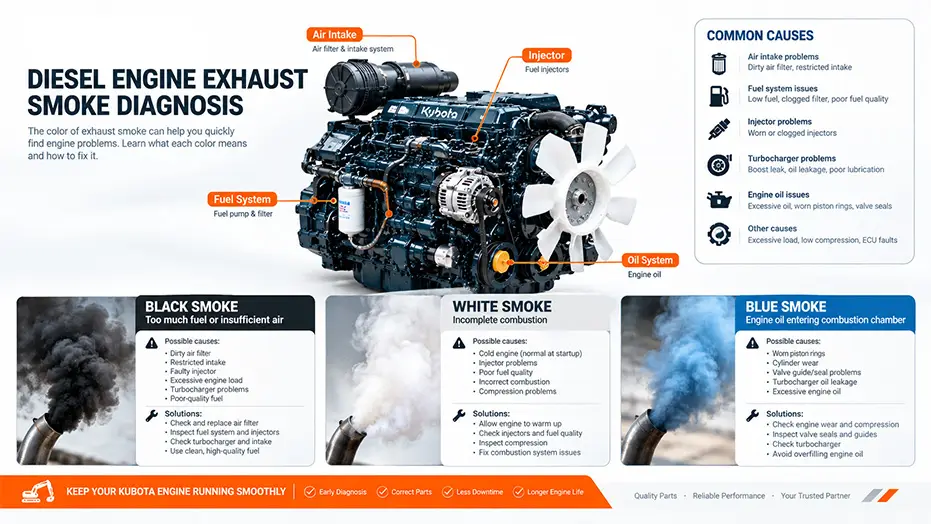
Exhaust color can provide important clues about diesel engine problems.
Black Smoke
Usually indicates too much fuel or insufficient air.
Possible causes include a dirty air filter, faulty injector, restricted intake, or excessive engine load.
White Smoke
Can indicate incomplete combustion, especially during cold starts. Persistent white smoke may be related to injectors, fuel quality, or compression problems.
Blue Smoke
Usually means engine oil is entering the combustion chamber. Possible causes include worn piston rings, cylinder wear, valve problems, or turbocharger oil leakage.
6. Situations Requiring Immediate Engine Shutdown
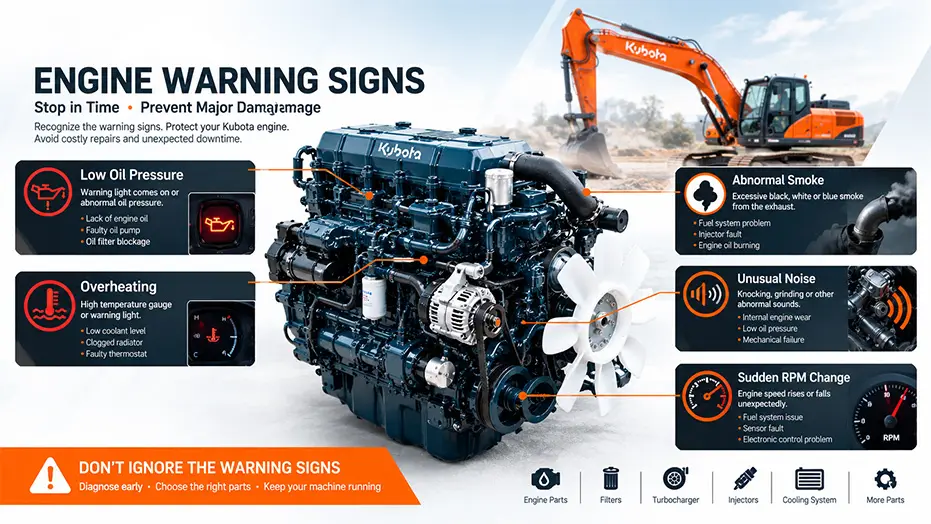
Some symptoms indicate that continued operation could cause serious engine damage.
Stop the Kubota engine immediately if you notice:
- Low oil pressure warning
- Severe engine overheating
- Unusual knocking or grinding noises
- Suddenly heavy black smoke
- Unexpected engine RPM changes
- Serious warning or fault indicators
After shutdown, identify the cause before restarting the engine.
Conclusion
Kubota diesel engines are designed for reliable operation, but regular inspection and timely troubleshooting are essential for maintaining performance and extending engine life.
Many problems can be traced to relatively simple components such as the fuel filter, air filter, injector, thermostat, fan belt, water pump, engine oil, radiator, battery, or fuel system.
The key is to diagnose the problem systematically instead of replacing parts randomly. Start with basic checks such as fuel, oil, coolant, filters, belts, and warning indicators. If the problem persists or involves internal engine components, fuel injection, electronic controls, or lubrication pressure, professional diagnosis should be performed.
If you have any technical questions, wish to learn more about our products, or want to find what you need more quickly, please feel free to contact us.
FAQs
Q1. Why is my Kubota diesel engine difficult to start?
Common causes include low fuel, a clogged fuel filter, air or water in the fuel system, a weak battery, excessive oil viscosity in cold weather, or an injection-system problem.
Q2. Why does my Kubota engine have low power?
Check the air cleaner, fuel supply, fuel filter, fuel quality, injectors, turbocharger, and engine warning indicators. A clogged air filter or restricted fuel supply is a common starting point for diagnosis.
Q3. Why does a Kubota engine suddenly stop?
Possible causes include fuel starvation, air in the fuel system, a faulty injector, overheating, lubrication problems, or an electronic protection shutdown.
Q4. What causes a Kubota diesel engine to overheat?
Common causes include low coolant, a clogged radiator, a damaged fan belt, thermostat failure, water pump problems, low engine oil, excessive load, or a cooling-system fault.
Q5. What does black smoke from a Kubota diesel engine mean?
Black smoke commonly indicates incomplete combustion caused by excessive fuel or insufficient air. Check the air cleaner, fuel injection system, injector, intake system, and engine load.
Q6. What does blue smoke mean on a diesel engine?
Blue smoke generally indicates that engine oil is entering the combustion chamber. Possible causes include worn piston rings, cylinder wear, valve-related problems, excessive oil, or turbocharger oil leakage.
Q7. When should I stop a Kubota diesel engine immediately?
Stop the engine if the oil-pressure warning appears, severe overheating occurs, unusual mechanical noises develop, exhaust suddenly becomes very dark, or engine RPM changes unexpectedly.
Q8. Should I replace parts immediately when troubleshooting a Kubota engine?
Not necessarily. First identify the cause of the failure. Check the simplest potential causes before replacing expensive components such as injectors, fuel pumps, turbochargers, or engine assemblies.